In industrial environments, innovation in wet wipes is primarily aimed at optimising the base material. The use of technical crepe paper enhances liquid absorption, maintains wet strength and ensures stable performance in automated production lines — all key factors in the effectiveness of the final product.
Why the Base Material Is Key to Wet Wipe Performance
Paper used in wet wipe manufacturing must simultaneously meet several technical requirements: efficiently absorb liquid, maintain structural integrity when wet and behave predictably in high-speed production lines.
As detailed in the processes involved in wet wipe production, the material does not simply act as a support layer, but as a functional component that directly influences both product performance and industrial efficiency.
Technical Crepe Paper: The Basis of Innovation in Wet Wipes
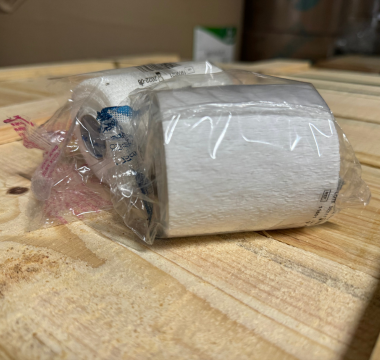
Crepe paper is characterised by a crinkled structure that provides controlled elasticity and increased effective surface area. This configuration makes it particularly suitable for applications where absorption and wet strength are critical.
Current innovations do not modify the fundamental concept of crepe paper; rather, they optimise specific manufacturing parameters to improve its performance in hygiene applications.
Fibre Structure Optimisation for Greater Absorption
One of the main advances lies in the configuration of the fibre structure. The arrangement, length and orientation of fibres directly influence the paper’s ability to absorb and distribute liquid evenly.
The most advanced solutions make it possible to:
- Increase initial absorption without premature saturation.
- Improve liquid retention during use.
- Reduce the risk of tearing or loss of cohesion.
These improvements are directly linked to absorption and resistance in wet wipes, a key factor in ensuring product functionality.
Wet Strength: Stability Throughout the Entire Use Cycle
The strength of the paper once impregnated is one of the main quality indicators in a wet wipe. Insufficiently optimised material can degrade during cleaning, affecting the user experience and perceived quality.
Innovations in crepe paper aim to maintain material cohesion after liquid absorption, in line with hygiene industry quality standards, where wet stability is essential.
Grammage Adjustment and Behaviour in Production Lines
Paper grammage directly influences its behaviour during manufacturing. An unsuitable grammage may cause breakage, production stoppages or unnecessary raw material consumption.
Innovation in wet wipes includes precise grammage adjustment in order to:
- Optimise mechanical strength with the lowest possible weight.
- Improve reel behaviour.
- Ensure stability in high-speed automated processes.
This approach enhances production efficiency without compromising product quality.
Compatibility with Automated Industrial Processes
Crepe paper intended for wet wipes must behave consistently during cutting, folding and impregnation stages. Technical innovations consider the entire production process, not just the final product.
The main objectives include:
- Reduction of waste and dust.
- Uniform material performance.
- Minimisation of technical incidents in machinery.
Innovation and Sustainability in the Hygiene Industry
Innovation in crepe paper also responds to sustainability criteria. Optimising material performance makes it possible to reduce resource consumption without compromising product functionality.
This approach aligns with sustainability strategies applied to crepe paper in industrial applications, where technical efficiency and environmental responsibility progress together.
Application of These Innovations Across Different Wet Wipe Types
Not all wet wipes present the same technical requirements. Innovation in crepe paper allows the material to be adapted to different uses, adjusting absorption, strength and grammage according to the final application.
This ability to customise reinforces the role of crepe paper as a specialised technical solution within the hygiene sector.
Arrosi’s Technical Approach to Crepe Paper Development
At Arrosi, a crepe paper manufacturer, the development of technical crepe papers is based on the rigorous analysis of the real needs of each industrial application. Innovation is approached as the optimisation of specific paper variables in order to improve its behaviour in targeted uses such as wet wipes.
This approach makes it possible to deliver solutions aligned with current standards of quality, efficiency and sustainability, adapted to the requirements of the hygiene industry. Innovations in wet wipes translate into measurable improvements in the base substrate: greater absorption, improved wet strength and more stable behaviour in industrial processes.
For manufacturers, investing in optimised papers is not an aesthetic decision, but a technical choice that directly impacts product performance and production process efficiency.
Discover how Arrosi develops specific solutions for wet wipe manufacturing:
https://arrosi.com/en/applications-and-sectors/sanitary-wipes
If you would like to learn more about our technical approach and industrial applications, you can follow Arrosi’s activity on LinkedIn.
Do you have a specific project or require technical advice? Contact our team through the contact section: https://arrosi.com/en/contact
Key Questions About Innovation in Wet Wipe Materials
What does innovation in wet wipe materials involve?
It refers to technical improvements in the substrate used to manufacture wet wipes, focusing on absorption efficiency, wet strength and industrial stability.
How does crepe paper innovation improve wet wipe performance?
By optimising fibre structure, grammage and mechanical properties, crepe paper innovation enhances absorption and maintains structural integrity during use.
Why is wet strength important in hygiene substrates?
Wet strength ensures that the wipe remains cohesive after saturation, preventing tearing and maintaining cleaning effectiveness.
How does material innovation influence production efficiency?
Optimised substrates reduce machine stoppages, improve reel behaviour and support consistent performance in automated production lines.
Is sustainability part of wet wipe material innovation?
Yes. Modern substrate development integrates resource efficiency and renewable raw material considerations alongside technical performance.