In this article, we explore the driving forces behind this transition, the competitive advantages of paper over other materials, and real examples of how companies are implementing it across their logistics chains.
1. The Transformation of Industrial Packaging Toward Sustainability
1.1 A Global Demand for Eco-Friendly Solutions
The growing environmental awareness among consumers, institutions, and companies is redefining market priorities. According to a Nielsen study, over 80% of consumers value brands that use sustainable packaging. In this context, industrial packaging faces a double challenge: protecting products during transportation and minimizing environmental impact.
1.2 Stricter Regulations
Policies such as the European Strategy for Plastics or extended producer responsibility laws are encouraging—and often mandating—the replacement of plastic materials with more sustainable alternatives. This is where paper takes center stage.
2. Advantages of Paper as an Industrial Packaging Solution
2.1 Recyclability and Biodegradability
Paper is 100% recyclable and biodegradable, making post-consumer waste management much easier. Unlike plastic, which can take centuries to decompose, paper reintegrates quickly into natural cycles, reducing the environmental footprint of packaging.
2.2 Weight Reduction and Logistics Cost Savings
Paper-based industrial packaging, being lighter than other options like reinforced corrugated board or rigid plastics, allows for optimized transport and lower shipping costs. This translates into significant savings for companies, especially in high-volume logistics sectors.
2.3 High Versatility and Customization
Thanks to innovations in paper technology—such as kraft paper with polyethylene or moisture-resistant treated paper—it is now possible to adapt this material to the demands of industrial environments: mechanical strength, protection against external agents, anti-slip properties, and more.
3. Real-World Applications of Paper in Industrial Packaging
3.1 Internal Protection and Wrapping
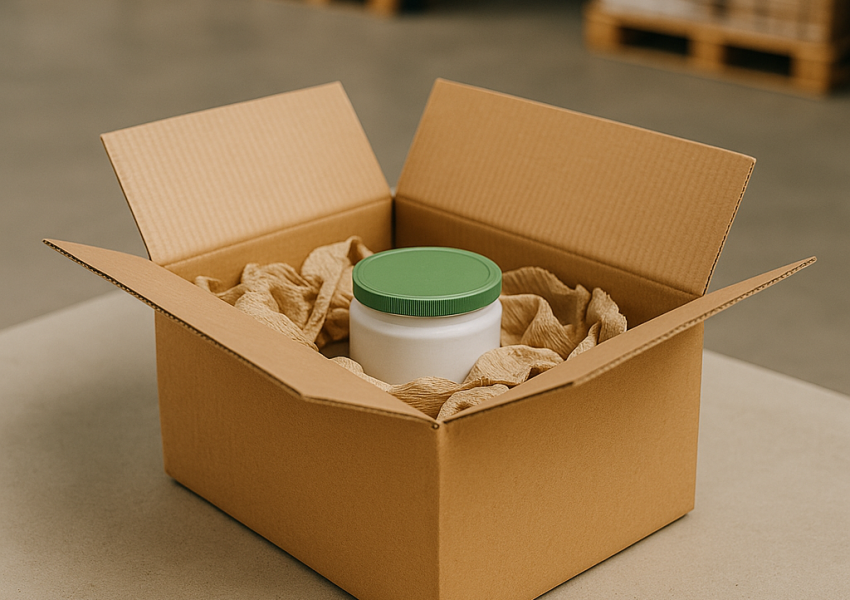
Many companies use kraft paper as filler or wrapping material to protect products during transportation. This use has successfully replaced bubble wrap or polyethylene foams in sectors like e-commerce, electronics, and cosmetics.
3.2 Outer Packaging and Durable Wrappers
Technical advancements now allow paper to be used as outer wrapping, even in applications previously deemed impossible. Solutions like polyethylene-coated paper combine the strength of plastic with the sustainability of paper—ideal for industrial packaging of metal goods, mechanical parts, or tools.
3.3 Industrial Sacks and Bags
From the food industry to chemicals, multi-layer paper sacks have gained ground over plastic sacks. Their strength, printability, and ease of recycling make them an optimal solution for many businesses.
4. Success Stories: Companies Already Betting on Paper
4.1 Arrosi: Sustainable Solutions with Creped Paper for Industrial Packaging
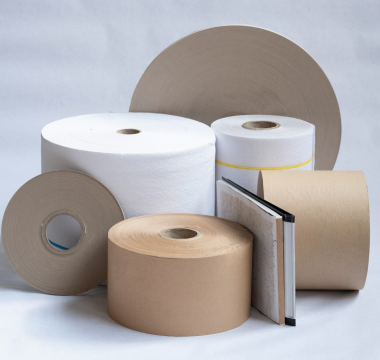
At Arrosi, we’ve been manufacturing and processing paper for over 40 years, developing industrial packaging solutions that combine sustainability, efficiency, and sector-specific adaptability. One of our specialties is creped paper—a material known for its elasticity, cushioning capacity, and adaptability to various products.
Thanks to these features, creped paper has become a real alternative to plastic in multiple applications:
- Protection of metal parts and technical components during transportation
- Wrapping of delicate products that require secure holding without damage
- Interlayers and separators in pallets or boxes to prevent friction or impacts
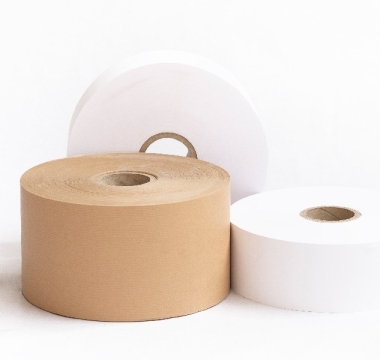
We offer a variety of formats and grammages to meet every client´s needs—from rolls to custom-cut sheets. Our creped paper range is produced under strict quality standards, using recyclable raw materials and environmentally friendly processes.
At Arrosi, we don’t just supply material—we work closely with our clients to adapt every solution to their logistics flow, optimizing both product protection and material efficiency. To dive deeper into how we develop these solutions, check out our article on sustainable packaging with creped paper.
4.2 Multinationals Leading the Shift
Companies like IKEA, Nestlé, and Unilever have begun replacing plastic in their industrial packaging processes with paper-based solutions, setting a new sustainability standard in logistics. IKEA, for example, has almost entirely eliminated expanded polystyrene in favor of recycled paper cushioning.
4.3 SMEs Making a Difference
It’s not just large corporations leading this change. Many small and medium-sized enterprises are embracing paper as a core part of their sustainability strategy, improving brand image and attracting environmentally conscious customers.
5. The Future of Industrial Packaging: Innovation with Paper
5.1 Nanotechnology and New Composites
Research into new materials is producing advanced papers enhanced with nanoparticles to improve strength, barrier properties, and functionality. These developments pave the way for industrial packaging with features like temperature or humidity indicators—without compromising sustainability.
5.2 Automation in Packaging Lines
Advances in machinery are making it easier to integrate paper into automated industrial processes, removing previous friction points and enabling its wide adoption in production plants and logistics centers.
6. Conclusion: Paper as a Strategic Ally
The shift toward paper is not just a trend—it’s a logical and necessary evolution within industrial packaging. Its sustainability, adaptability, and logistical efficiency make it a key material in packaging strategies for the decades ahead.
Companies that anticipate this change will not only reduce their environmental impact but also gain competitiveness and enhance their brand perception.
Want to learn how to incorporate paper solutions into your industrial packaging? At Arrosi, we develop custom proposals that combine sustainability, efficiency, and design. Contact us today and transform the way you package.